You should see Beau Is Afraid. At the same time, I warned you not to see Beau Is Afraid. This is the confusing dichotomy of a cinematic experience I resented & rejoiced to behold.
Yes, this film is as marvelous and ambitious as it is utterly unhinged and ridiculous, yet both ends of the spectrum seem to co-exist rather well, if you are willing to tag along for the ride. While it may not be accessible or even stomach-able for a large number of audience members, this anti-odyssey completes what has been its director’s dream for quite some time.
If you are open to disconcerting chaos, you may find this film shines in its unyielding commitment to the overall vision — no matter how absurd, indulgent, or distressing.
Beau Is Afraid
Premiere: April 10, 2023 (Los Angeles)
Beau Is Afraid revolves around the titular Beau Wasserman (Joaquin Phoenix), son of a wealthy, famous businesswoman named Mona (Patti LuPone). To fully understand this particular film, spoilers are in order.
If you wish to retain some secrets until you watch this for yourself, stop reading now, or scroll at your own risk beyond the (lengthy) synopsis.

Beau lives alone, cripplingly anxious in a horrifically downtrodden city, depicted in ridiculous, caricatured styles. Everything is exaggerated, with violence, insanity, and even the observably obscene graffiti reaching far beyond anything one could imagine in reality — whilst still being somewhat rooted in it.
The only relatively safe space seems to be the office of Beau’s therapist (Stephen McKinley Henderson), who prescribes a new medication for him at one of their sessions.
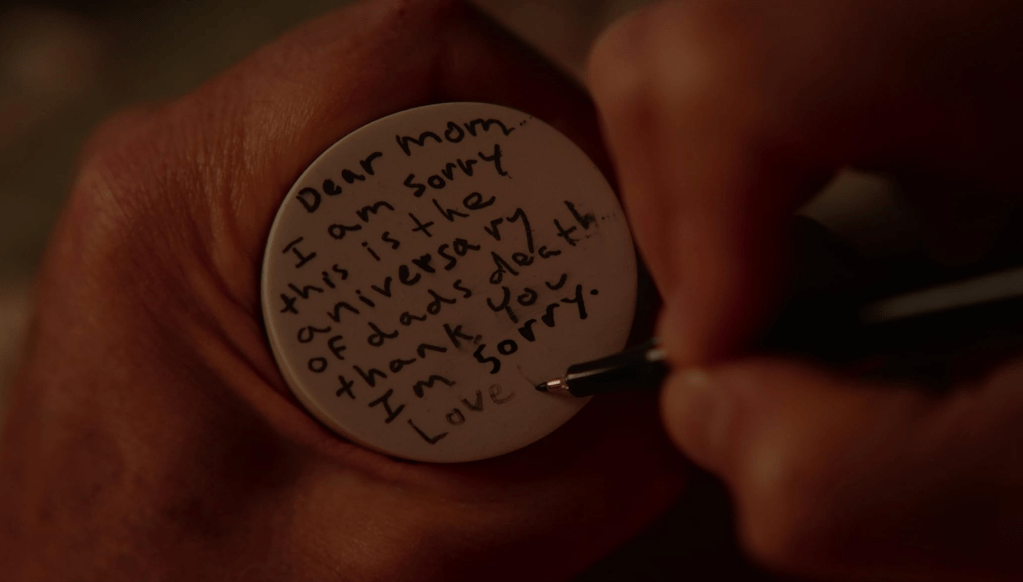
Beau is preparing to visit his mother on the anniversary of his father’s death, but a string of unfortunate events sidetracks the effort.
After oversleeping from a night of noise and threatening behavior from the neighbors, he gathers his things in a rush for the airport, only to have his keys and luggage stolen from the apartment’s very doorstep after a momentary absence.
Paralyzed in panic from the ordeal, Beau calls his mother to explain the situation, though she coldly dismisses him and his list of circumstances leading to the missed flight. Instead of reassurance, her disappointment is resounding, and she hardly speaks at all.
Soon after, Beau panics yet again, realizing he has taken medication without water, becoming more alarmed when a quick Google search suggests he might die in such a situation.
Without his keys, he decides to keep the apartment door open a smidge to sprint toward a dilapidated convenience store across the street for bottled water. Almost immediately after arriving at the shop, a band of crazed civilians begin to storm his apartment building as he shakily struggles to dig enough change out of his pockets.
Beau returns from the frantic shopping trip to find himself completely locked out by the intruders (now utilizing his home as a party space) and opts to sleep on some scaffolding outside.
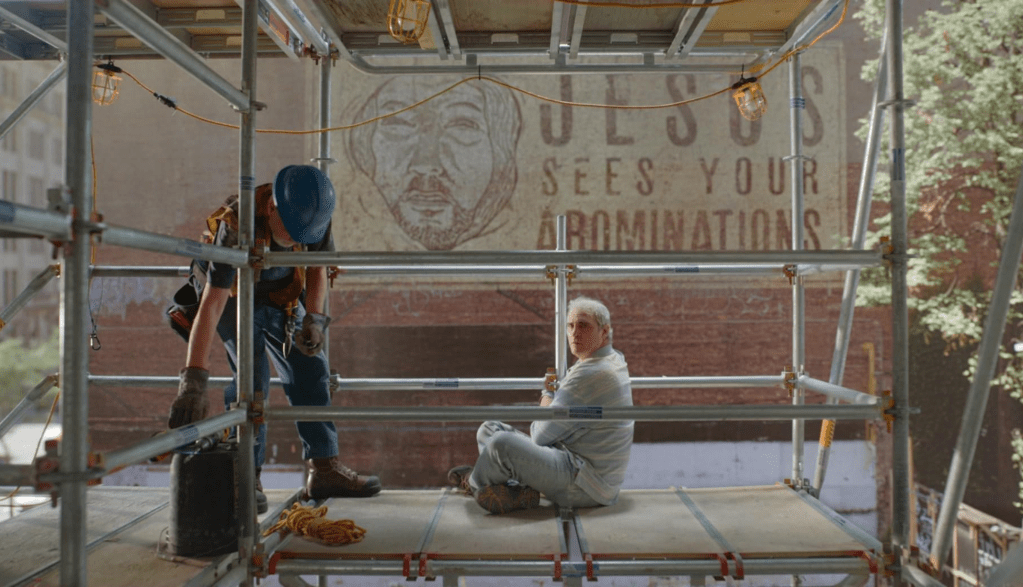
The next morning, Beau re-enters the apartment and attempts to purchase a new plane ticket online (despite a shoe embedded in the computer screen from the prior night’s unwelcome rager). To his dismay, the transaction is repeatedly declined.
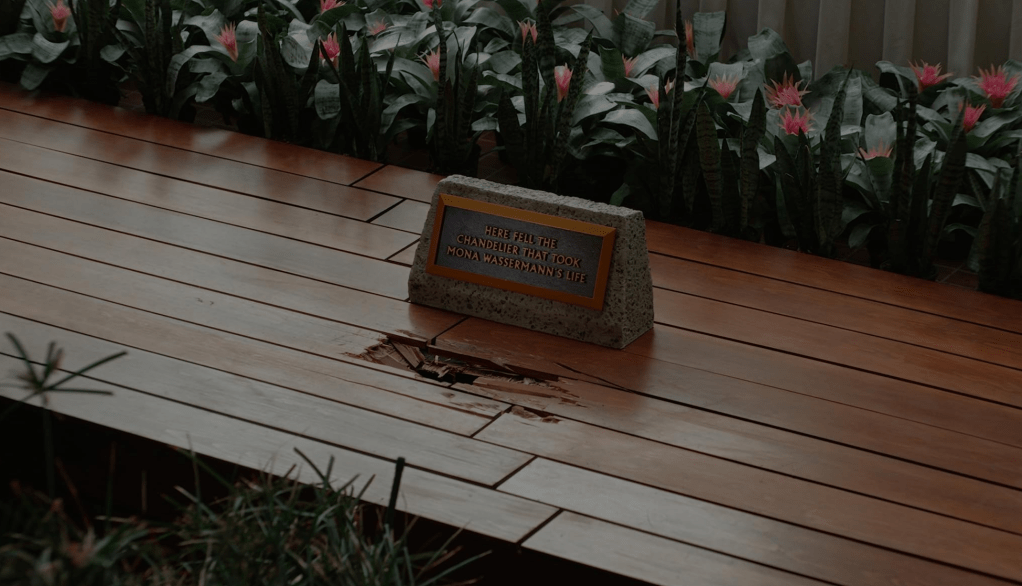
He attempts to call his mother again, reaching a UPS driver instead. This driver tells Beau he’s found a woman decapitated on the floor from a fallen chandelier while fulfilling a delivery, and the phone he’s answered purportedly belongs to the victim (here’s some of that chaos I was talking about).

Devastated at the realization that this woman is clearly his mother, Beau attempts to calm himself with a bath when a straggling home invader from the previous night falls on him from the ceiling, prompting Beau to run. After multiple violent confrontations with this individual and more deranged attackers, murderers, and a police officer whilst naked out on the street, he gets slammed by a food truck and passes out.
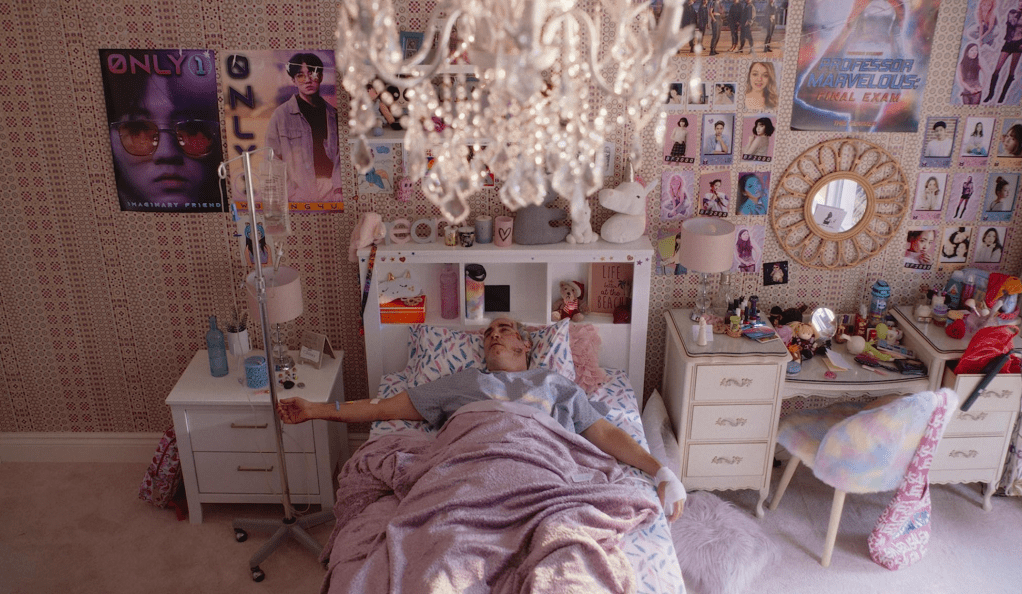
Beau wakes up two days later in a stereotypical teenage girl’s bedroom, bandaged up and connected to an IV.
He is introduced to Grace (Amy Ryan) and Roger (Nathan Lane), seemingly pleasant strangers who appear to have taken him in during his hour of need. Their daughter Toni (Kylie Rogers) resents this new guest occupying her room, and it is also revealed the family is mourning the loss of their son (apparently killed in action), whose old bedroom remains empty. Jeeves (Denis Ménochet), one of their late son’s old war buddies, also lives with the family and appears profoundly disturbed.
In a phone call, Beau is chastised severely by Mona’s attorney, Dr. Cohen (Richard Kind), who says the Jewish custom of burying a body as soon as possible cannot happen until he arrives — as his presence at the funeral was her final wish. He’s consequently caused humiliation to the family name and must come immediately lest he add to the disgrace.
Roger initially promises to take Beau but repeatedly postpones and reneges. Grace slips disconcerting notes suggesting he do nothing to implicate himself in anything bad, and he eventually notices some sort of hidden, elaborate surveillance system focused on him.
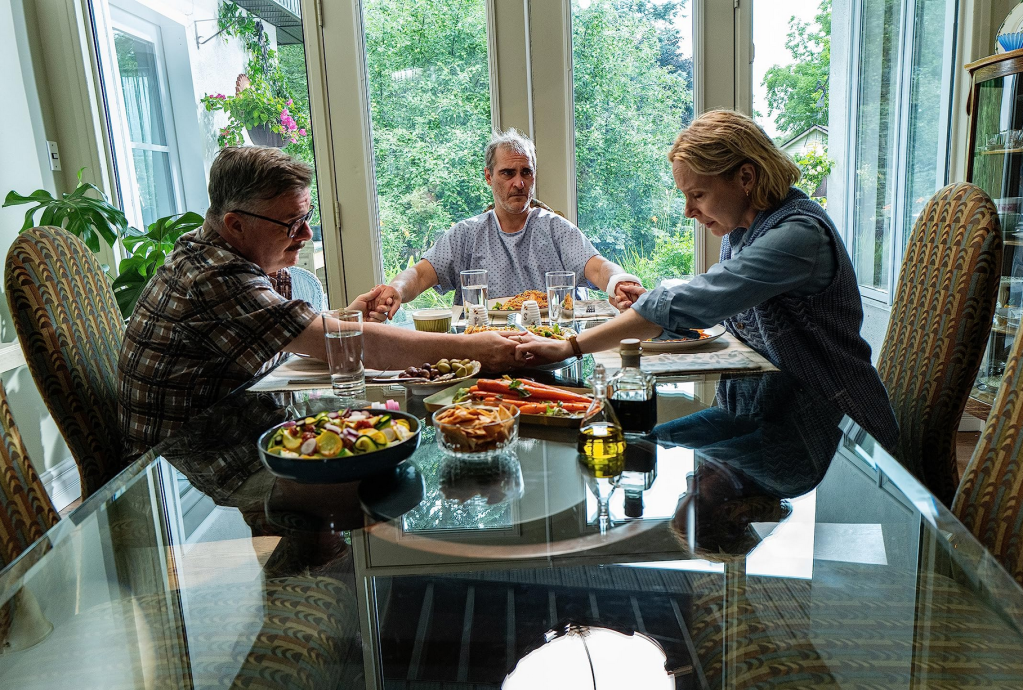
Toni, believing her parents wish to adopt Beau (in spite of his age) and replace her brother angrily attempts to make Beau drink a can of paint in the abandoned bedroom of the deceased. He refuses, prompting her to do it herself as Beau helplessly watches, committing suicide in the process. Grace walks in on the scene and immediately blames Beau in a grieved passion as he flees into the woods. The bloodthirsty Jeeves is sent after him.
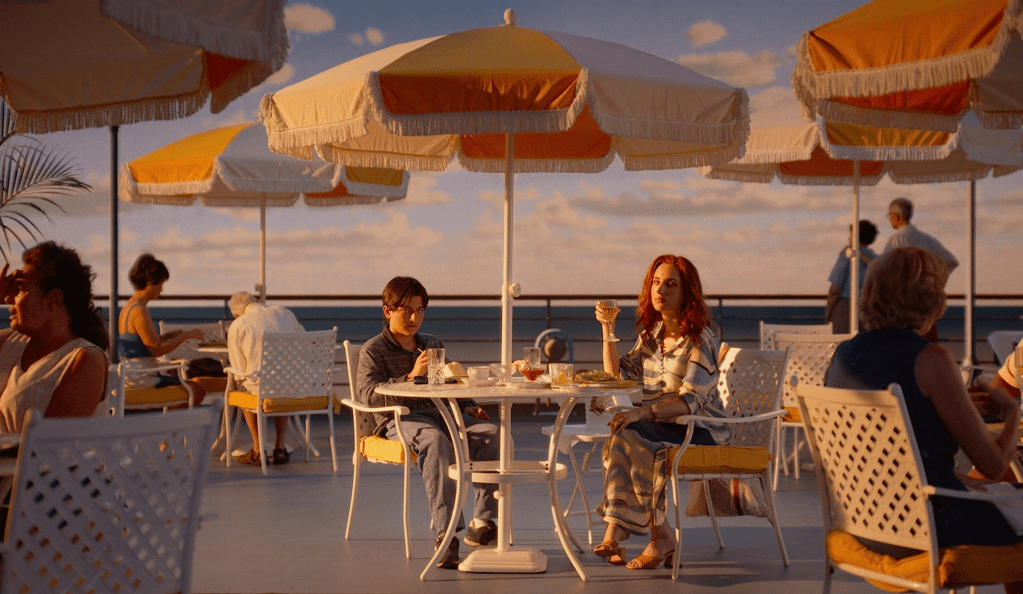
Throughout this film, there are also flashbacks to a cruise Beau and Mona took sometime during his adolescent years. Here, Beau is fatherless and very much clings to his mother, though he begins to fall for another girl named Elaine Bray. The two eventually kiss and promise to remain virgins until they meet again, as Elaine is ultimately ripped away from Beau by her mother and ordered never to speak with or see him again.
In his youth, Mona also tells Beau his father died the night he was conceived due to a rare condition in which achieving an orgasm immediately caused cardiac arrest. She says Beau likely suffers from the same ailment.

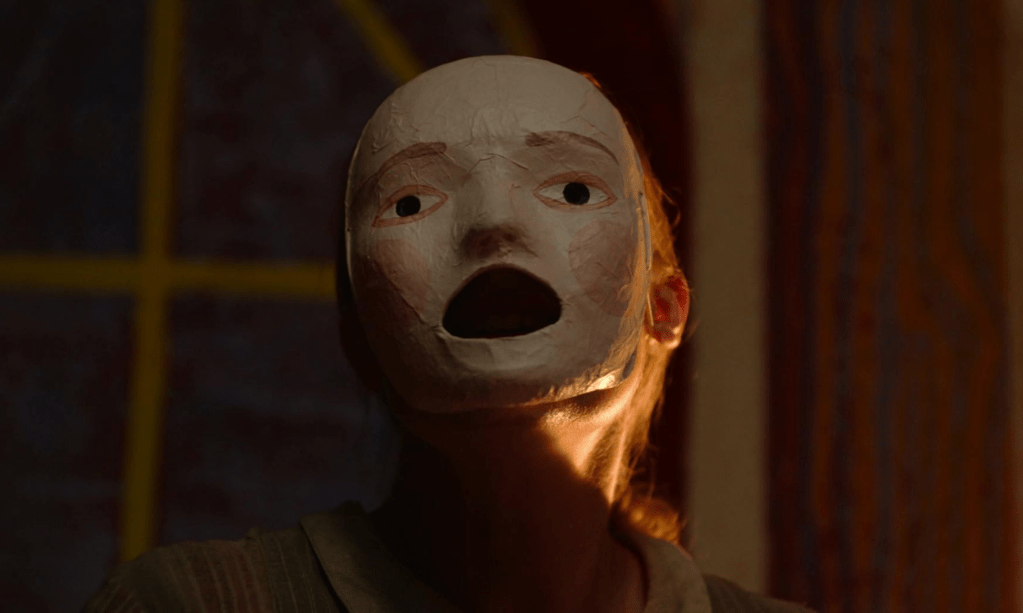
Deep in the woods and seemingly out of Jeeves’ clutches, Beau meets a traveling theater troupe known as “The Orphans of the Forest” — a pregnant woman named Penelope (Hayley Squires) tends to his wounds from the chase and comforts him.
The troupe puts on a rehearsal of their play, entrancing Beau as his mind drifts off and he imagines himself as the protagonist.
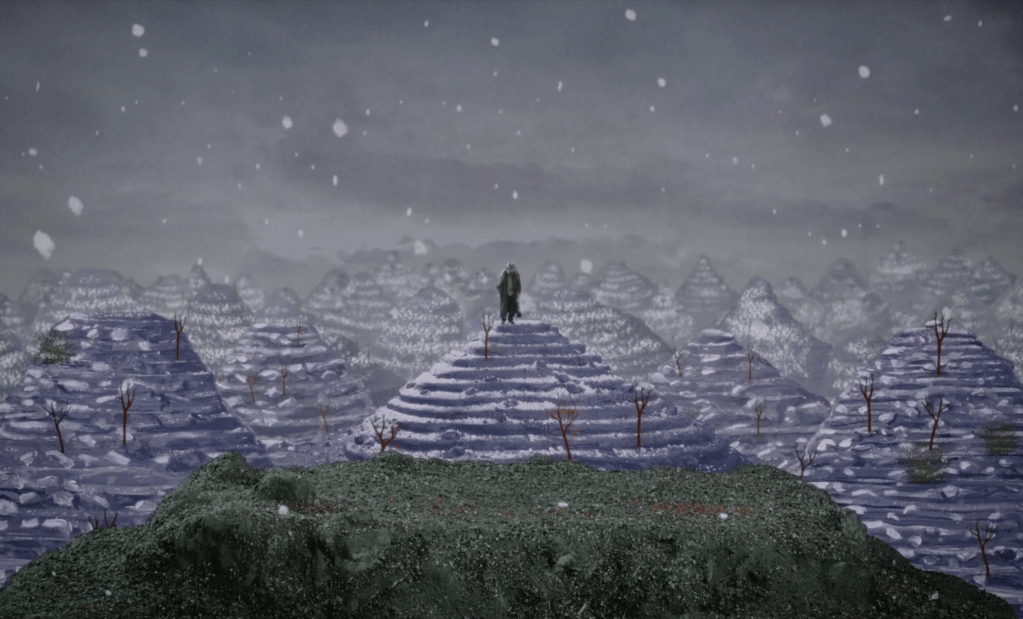
The film then depicts the troupe’s story in an extended animated sequence, essentially an outline of a “hero’s journey” — in which a father spends his entire life looking for his family after a flood separates them.
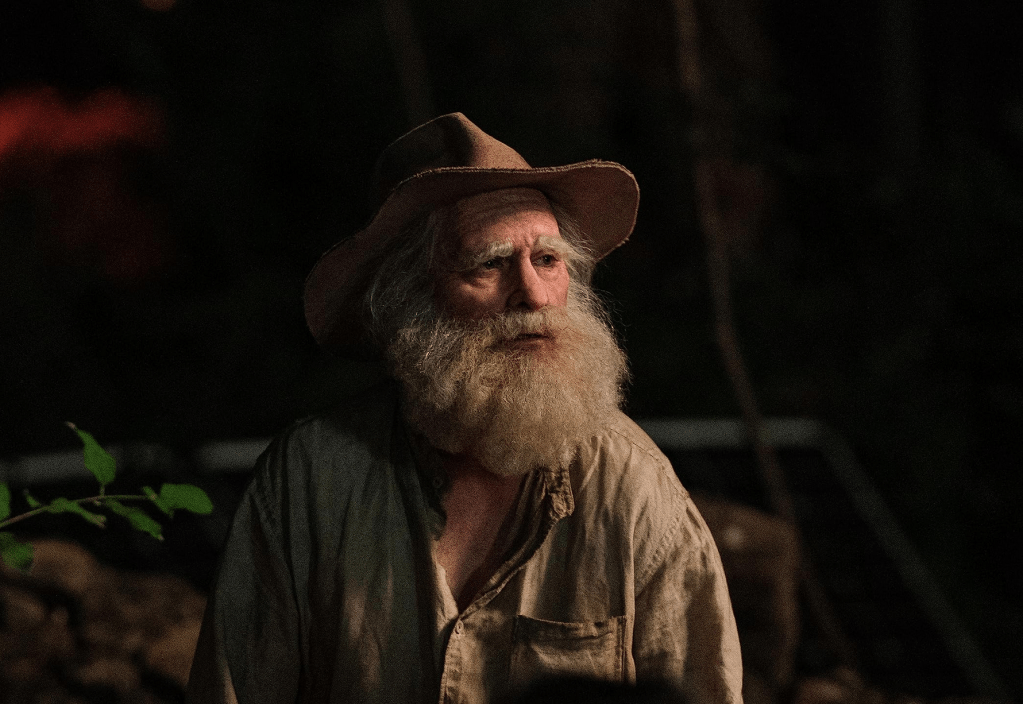
Once Beau snaps back into reality, a man approaches him, claiming to have known his father, and suggests he is still alive. Suddenly, before any additional details can be provided, a grenade goes off and Jeeves bursts onto the scene, slaughtering most of the troupe while Beau runs again.
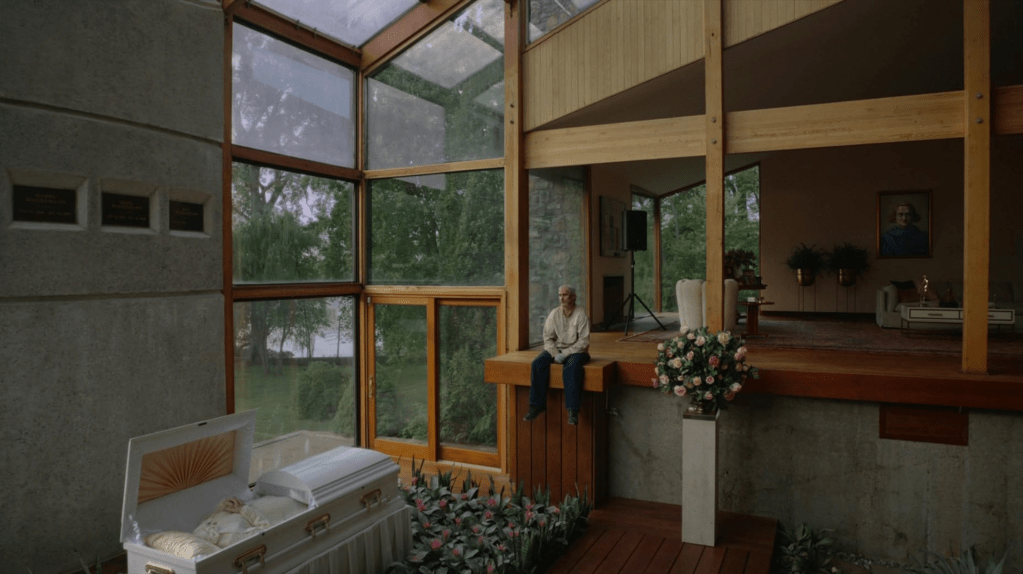
Beau hitchhikes to his mother’s estate, realizing he’s missed the funeral and no one seems to notice as the mansion empties out and he is the only one remaining. He reminisces on her life, viewing her accolades and prestigious awards along the walls, seeing how her existence revolved around him. There are several photos of Beau, including one which appears to be suspiciously recent.
After a nap, Beau is awakened to find someone at the front door arriving late for Mona’s service. It’s Elaine (Parker Posey), and there is still an electric connection between the pair. They reconnect before getting intimate; Beau begins to freak out, fearing he will die if he climaxes, but the terror gradually fades as he realizes he’s finished without any adverse health effect. Are things finally looking up for our poor protagonist?
Perhaps not, as Elaine is frozen stiff. She abruptly topples over — dead.
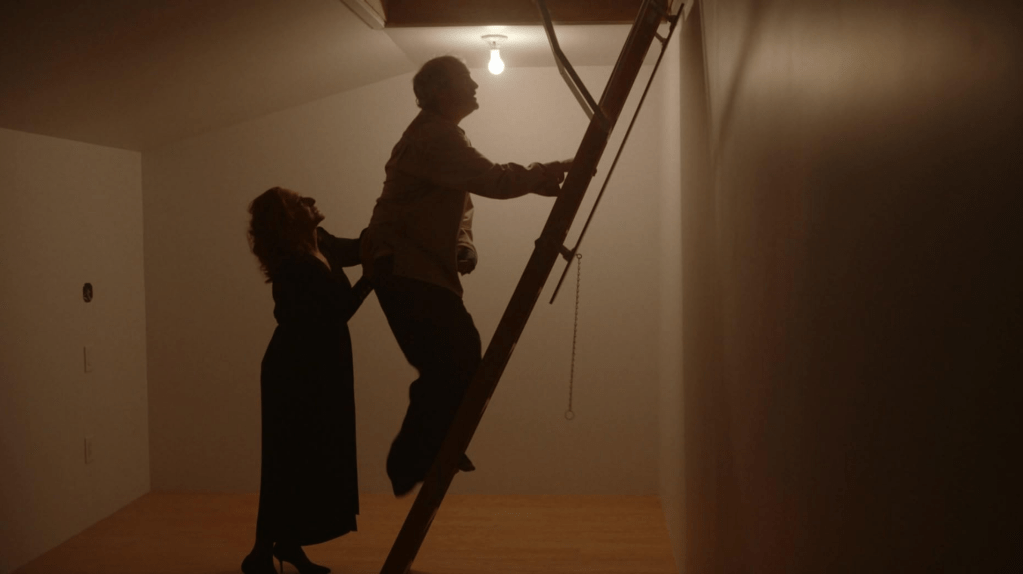
Mona appears from the shadows, revealing she has been alive the entire time, watching and testing Beau. His therapist is there, too, and has been conspiring with his mother, conveying every sensitive detail of their sessions (in which he routinely spoke of her).
As she chastises Beau for lacking love or conviction, he conversely demands to know the truth about his father. Mona obliges.
Beau climbs into the attic to discover he has a twin brother being kept up there, and, most shockingly of all, his father is in fact a massive, monstrous penis. You read that correctly.
Jeeves breaks into the house and is immediately murdered by the gargantuan penis monster dad thing, throwing Beau into a fit of rage over the humiliation and embarrassment. He’s been endlessly lied to and guilt-tripped. Worst of all, Mona isn’t only upset about a missed flight; she is upset about every small misdeed and inaction since Beau’s boyhood. She hates him.
After an entire film of passivity and negating the hero’s journey, he attempts to strangle his mother until she collapses, sending him into a regretful shock. Once again, he runs.

Beau then leaves the estate in a motorboat and embarks on a voyage out to sea. Upon reaching a cave, the motor begins to stall and he finds himself isolated on a circular lake surrounded by a massive arena and jumbotron.
He is now on trial for being a bad son, as a once again still-alive Mona (with Dr. Cohen) prosecutes him. Beau is left with a cheap, tacky lawyer in the corner who can barely be heard over the deafening accusations. He appeals to his mother, though his rebuttals become fewer, his voice fades, and realizing how hopeless everything is (his feet are glued down), he accepts a fate he seems to know is inevitably coming.
The motor explodes, the boat capsizes, and Beau quietly drowns. As the credits roll, the packed arena crowd quietly empties out while Mona remains with Dr. Cohen, sobbing.
Or, in other words, just another normal day for director Ari Aster.
What the F*ck?
Reception to this film is near-impossible to decipher. Beau Is Afraid holds a 63 on Metacritic, 67% on Rotten Tomatoes, 6.7 out of 10 on IMDb, and 3.4 out of 5 from Letterboxd.
It’s not for everyone. Let’s get that out of the way first. Understand precisely what you’re walking into, or you may not be prepared — granted, there’s probably nothing out there that could prepare anybody for a cinematic experience like this.
It’s completely insane, disturbing, tragic, confusing, straightforward, shocking, surreal, stupid, genius, sadistic, humorous, and beautiful.
This is neither all-encompassing horror nor drama, not even darkly comic satire — though it incorporates all at once into a cacophony of Beau’s experiences, and his personal perceptions of them. To appreciate this movie, do not expect answers or any accurate semblance of reality, both are relatively non-existent. The way this film presents itself is a subversion of reality, through the paranoid lens of a severely anxious non-hero whose embellishments and psychological struggles cannot be separated from the narrative. They are the narrative.
Reality is blurred and time is dilated — this film can feel incredibly slow at times, not from boredom but from absorption. It’s hypnotic and hallucinatory, suddenly jumping into action without warning, then sending the viewer back into a lulled trance.
Beau’s paralysis causes the caricatured worst-possible outcomes. Despite being well-mannered and thoughtful, his passivity permits the imminence of his demise. Blame, guilt, and a constant, incessant need for help prevent him from making difficult choices.
Beau Is Afraid is an anti-odyssey — a depiction of the hero’s journey without the hero (or with an adjunct, traumatized one, to say the least), dismantling the concept and rejecting a mythological narrative so many stories share a fundamental structure with by refusing to engage at every possible juncture.
Joaquin Phoenix devotes absolutely everything to the eponymous role. This film would not be possible with anyone going halfway, and his pure dedication is admirable.
A Kafkaesque Exploration of Anxiety

Ari Aster wields a twisted yet artistically astute knack for cinema as a visual experience, and he is the future of film-making when it comes to projects that are risky, creative, and original. He didn’t compromise on this film, which he’s been wanting to make for several years. Virtually nothing of his vision was cut or altered in the staggering three-hour runtime, and A24 liberally provided Aster with funds, creative control, and resources.

Earning that level of trust required the success of two “normal” productions before A24 even considered Beau Is Afraid — and if you know Aster’s work, you probably wouldn’t label Hereditary or Midsommar as anything remotely near conventional.

Terrible, bleak things are happening all around in an Aster film, and yet, they conceal the true horrors staring you straight in the eyes: the more relatable, universal anxieties, griefs, and burdens we bear in this life.
Like Kafka’s works, Aster characters are in nightmare worlds with all odds stacked against them. The plots are bizarre, complex, and illogical, but there are always parallels with reality — little windows, doors, and bridges connecting our personal experiences with what we’re seeing on screen. Life is bizarre, complex, and illogical. Anxiety and other mental battles feel bizarre, complex, and illogical.
As dark and unfair as Beau Is Afraid may seem, I’m sure there are many people out there who feel as if they’re on an anti-odyssey of their own, trapped under the momentum of “tyranny without a tyrant” — moving in circles through convoluted, absurd systems we cannot see and do not know the rules for. This story is taken to the absolute extreme, though it still offers some intriguing insights by going so far. It may have a depressing ending, but that doesn’t mean our real-life endings must be so morbid.
In feeling powerlessness, we see our own faults and strengths fully exposed. We see we are a part of the absurdity, we contribute to the absurdity, we create absurdity. If it’s possible for us to build these barriers, it’s equally possible to dismantle them.
Surreal & Compelling
This film is captivating, plain and simple; in due time, those eager to see where cinema can be pushed on the fringes of possibility will regard it as a classic.
A24 lost a great deal of money on this gamble, but truthfully, I think everybody knew the prospects for profitability were low here. This film was willed into existence; it was made because it had to be made.

For Ari, for the history of this craft, for the continued vibrancy of cinema as something truly transcendental, I am heartened to see something so avant-garde can be produced on a relatively large scale. It may not be easy to watch, but it’s important, and the entertainment is found in how enthralling the choices are, in the incessant urge many of us will feel to pick it apart until we grasp it in our own way. Your interpretation doesn’t need to match mine.

Overall, I am uncertain how to rate this.
I came into the theater anticipating absolute insanity, and it still was not quite what I expected…perhaps that’s the point?
I wanted it to end. I wanted it to keep going. Between the phallic attic objects and stop-motion narrative escapades midway, it’s safe to say this film goes anywhere and everywhere.

Beau Is Afraid will split audiences straight down the middle. I know a fair chunk of viewers will leave the cinema absolutely despising what they witnessed, and that’s precisely what makes it work. Whether you enjoyed it or not, it exists, and nobody can take it away now.
I may not be able to recommend it wholeheartedly to all, and it may indeed be somewhat indulgent. Nevertheless, it still has my support.

Miraculous and implausible, nothing like this will ever be made again. Cherish it for that reason alone.
Beau Is Afraid receives a 7 out of 10.
Additional Information:
- Director: Ari Aster
- Writer: Ari Aster
- Cinematographer: Pawel Pogorzelski
- Music: Bobby Krlic
- Production Companies: A24, Access Entertainment, IPR.VC, MW Industries, Square Peg
- Distributor: A24
- Countries: United States, Finland
- Images of Film from IMDb

For more film analysis, reviews, and thoughts, visit Cinemania.
 Home
Home 